The Incredible Landscape of Haleakalā National Park
Fine Art Photography of Haleakalā Crater and the Kīpahulu Coast

Haleakalā National Park is a sacred nature preserve on the Hawaiian island of Maui. Named after Haleakalā, a dormant volcano within its boundaries, the park covers an area of 33,265 acres (52.0 sq miles), of which 24,719 acres (38.6 sq miles) is a wilderness area. The land was designated a national park in 1976, and its boundaries were expanded in 2005.
Haleakalā was originally part of Hawaiʻi National Park along with the volcanoes of Mauna Loa and Kilauea on the island of Hawaiʻi, created in 1916. Hawaiʻi Volcanoes National Park was later made into a separate national park in 1961. The name Haleakalā is Hawaiian for "House of the Sun." According to a local legend, the demigod Maui imprisoned the sun here to lengthen the day. The Hawaiian National Park Language Correction Act of 2000 was proposed to observe the Hawaiian spelling, but it did not become law (1).
The park spans from the summit of the dormant Haleakalā Volcano, down through the lush tropical rainforests, and into the Kīpahulu coast. With such an incredibly diverse naturescape across such a short amount of distance, it’s been an honor to traverse these sacred lands and create fine art photography for people to enjoy in their homes, offices, or businesses.
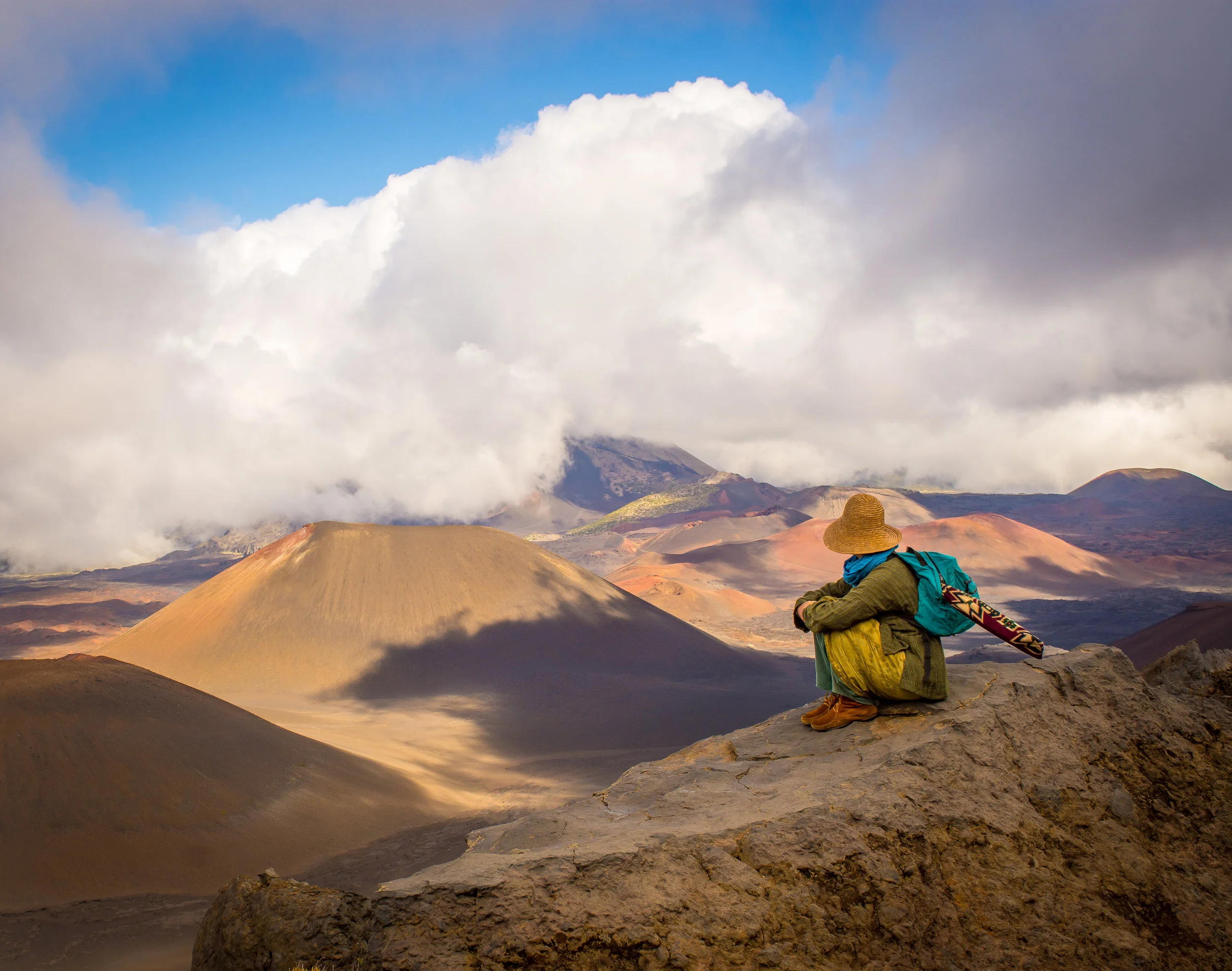
Exploring Haleakalā Crater
Every day of the year, visitors drive up the long and winding road to witness the extraordinary beauty at the summit of Mt. Haleakalā—an elevation of over 10,000 feet above sea level. This massive East Maui “volcano” forms more than 75% of Maui. Despite its name, Haleakalā Crater is geologically not volcanic in origin, as it’s not a true caldera. Scientists believe that Haleakalā's crater formed when the headwalls of two large erosional valleys merged at the summit. These valleys formed the two large gaps — Koʻolau on the north side and Kaupō on the south — on either side of the depression.
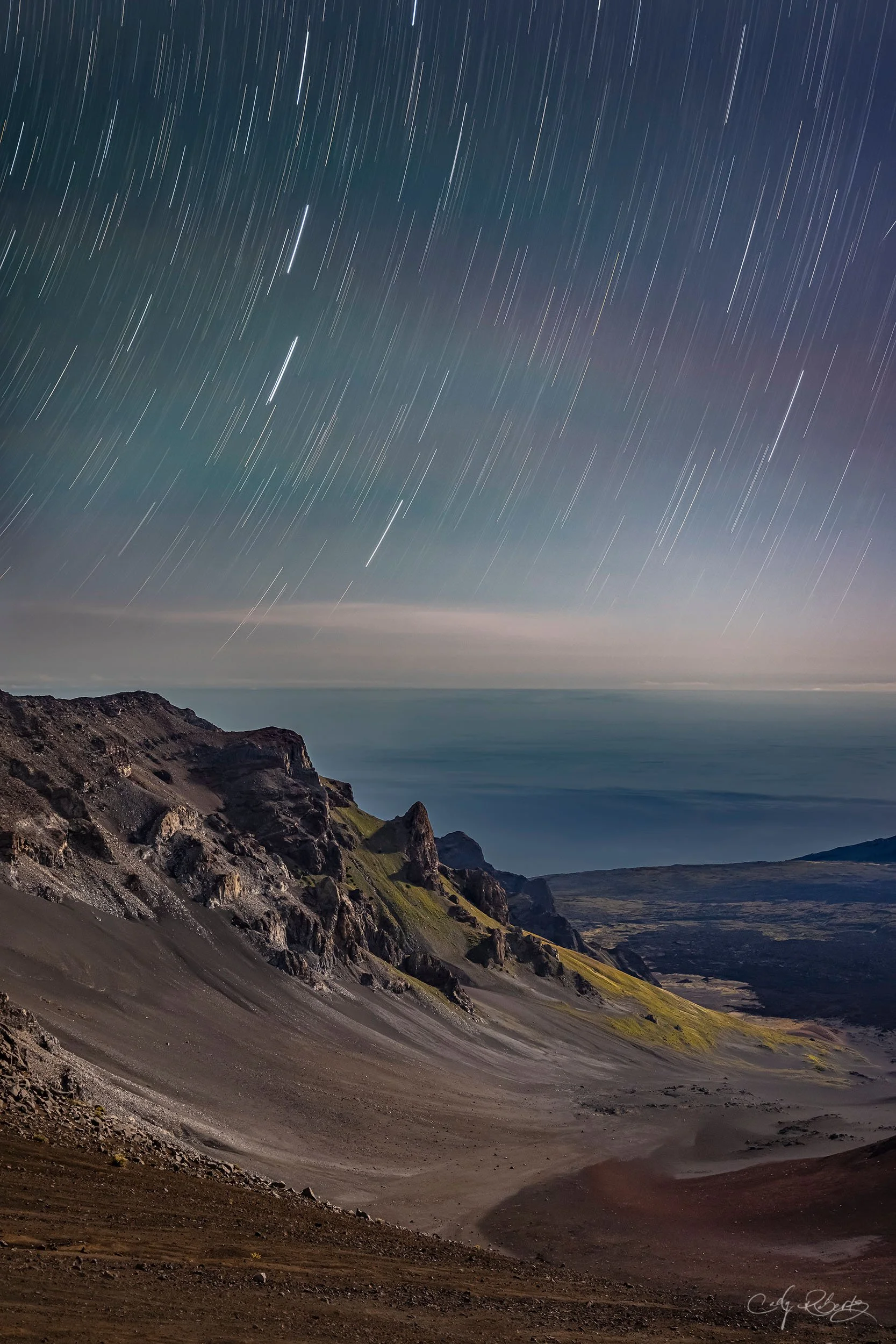
The interior of the crater is unlike anywhere else on Earth, with its deeply sculpted, richly colored, and forever-changing landscape. Large volcanic cinder cones, dramatic mountainous views, and the wilderness trails (Halemau’u and Sliding Sands) will leave you in awe. Determined hikers can explore the amazing remnants from Maui’s immense lava activity and camp in the back country with designated permits. The experience of being inside the crater is “other-worldly” and feels like a Martian landscape. In the world’s most isolated archipelago, Haleakalā offers one of the best places in the United States to witness the stars due to minimal light pollution and high-elevation clarity of the night sky. Capturing the Milky Way galaxy and star constellations from Haleakalā Crater is an astro photographer’s dream.
Exploring the Kīpahulu Coast
On March 26, 1951, Kīpahulu Valley was added to Haleakalā National Park (HNP) as the Kīpahulu Biological Reserve to ensure protection of the endangered ecosystems within the sanctuary. Eighteen years later, on January 10, 1969, the HNP boundaries were expanded to include the Kīpahulu coastal area of ʻOheʻo. Although access in the Kīpahulu Biological Reserve is strictly limited to researchers and managers, the ʻOheʻo region of the park is open for recreation. This coastal region is a beautiful place to hike, have a picnic, and witness more of the “old Hawaiʻi” where native cultural traditions are still practiced today.
The Kīpahulu ʻOhana, a non-profit community organization, was established in 1995 through a co-operative agreement with Haleakalā National Park to revive, restore, and share the practices of traditional Native Hawaiian culture (1). It’s very admirable how the Hawaiian people continue to strive to perpetuate their cultural heritage, which greatly involves their unique connection to the ‘aina(land) that they consider very sacred.
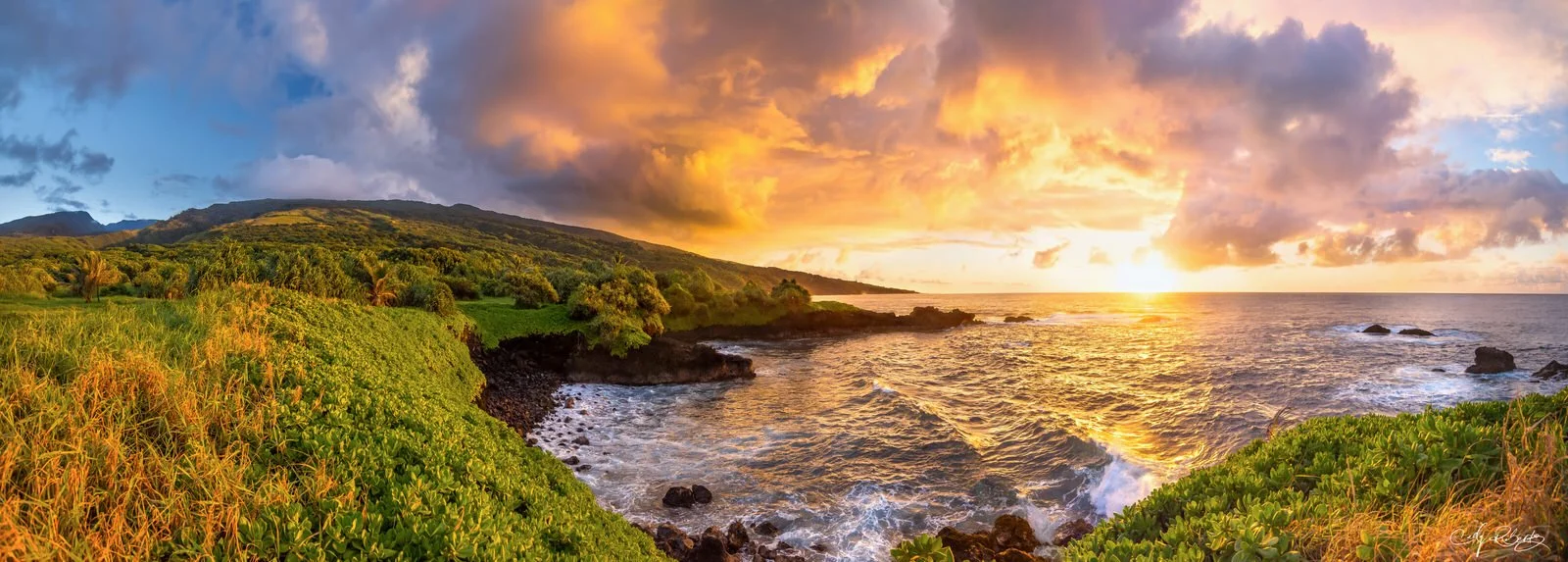
‘Ohe’o Rising from the Ocean Therapy fine art series
As if the sweeping views of Kīpahulu’s ocean vistas aren’t enough, the surreal beauty of the park’s district continues for those willing to hike up the valley of ‘Ohe’o along the Pipiwai Trail. A walk under lush rainforests with the sounds of native birds, sights of beautiful waterfalls, and a journey through a bamboo forest is a delightful adventure. One of the most amazing trees I’ve been fortunate to document lives along the trail, a massive banyan tree that may be centuries old.
In Asian traditions, banyan trees are considered symbols of longevity or even immortality. Their intelligent branch growths create aerial roots that become additional trunks, anchoring the tree to the ground. This intricate web of life demonstrates the resilience of nature and the vital connections of all living things. The vertical panorama below captures the expansive canopy of this exquisite tree inside Haleakalā National Park, illuminated by the sunrise.
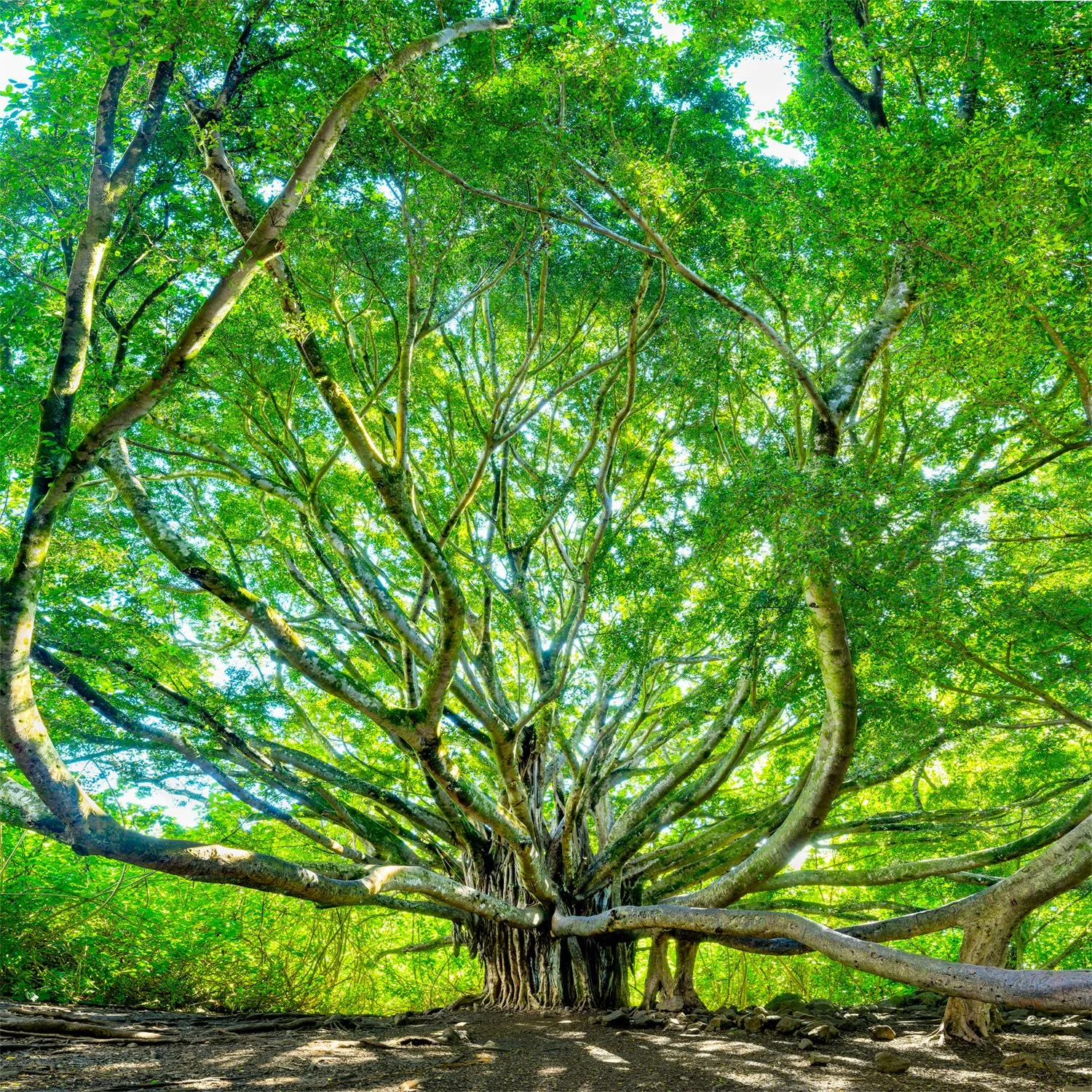
Bring life to your walls with a museum-quality fine art print of “Weaving Wisdom” from the Jungles & Forests fine art photography series by Cody Roberts
A Home of Endangered Species
Haleakalā National Park offers more than breathtaking views; it is also renowned as the national park with the highest concentration of endangered species, encompassing both plants and animals.
Maui, and the entire state of Hawai’i, boasts the world’s most diverse array of endangered plants. This distinction arises from the fact that many of our plants and animals are endemic to Hawaii, possessing a unique ecosystem that renders them vulnerable to any disruptions. Notably, these species are susceptible to the introduction of non-native species, which could jeopardize their existence. Since their propagation is impossible elsewhere, they are meticulously safeguarded against extinction. Notably, a staggering 30% of federally listed endangered plant species are confined to the Hawaiian islands.
Haleakalā National Park is home to 103 endangered plant and animal species, all of which are protected under the Endangered Species Act of 1973. Among these are the Nēnē bird, Hawaiian Monk seals that deliver their offspring on the beach, and the flowering silversword plants, which are exclusive to the summit of Haleakalā Volcano. Both species are recognized as members of the United States’ Endangered Species listing.The park also cares for endangered species, some of which exist nowhere else on Earth. For more information regarding safety, proper preparation, and situational awareness, as well as cultural resources and the endangered species, please visit the National Park Service website.
Respecting the Land and the Culture - Know Before You Go
As Haleakalā National Park’s beauty draws millions of visitors from around the World, and for this reason, it is imperative to visit these places mindfully and respectfully. Learning about the history and cultural practices that have existed here for hundreds of years will also allow you to have a much more meaningful experience in these natural wonders. These lands are sacred, so please treat them as such. The Kīpahulu District preserves its intact ahupua'a, a traditional Native Hawaiian land division that protects all resources from sea to summit. The streams are home to endemic gobies and other fish species that evolved from ancient saltwater ancestors.
Please leave natural resources and cultural artifacts, rocks, and structures alone, no matter where you travel in Hawai’i, but especially in our protected wilderness areas such as Haleakalā National Park. Know that flash floods and sudden rock falls can occur at any time! Swimming and wading in the streams is not recommended. Always stay out of closed areas.
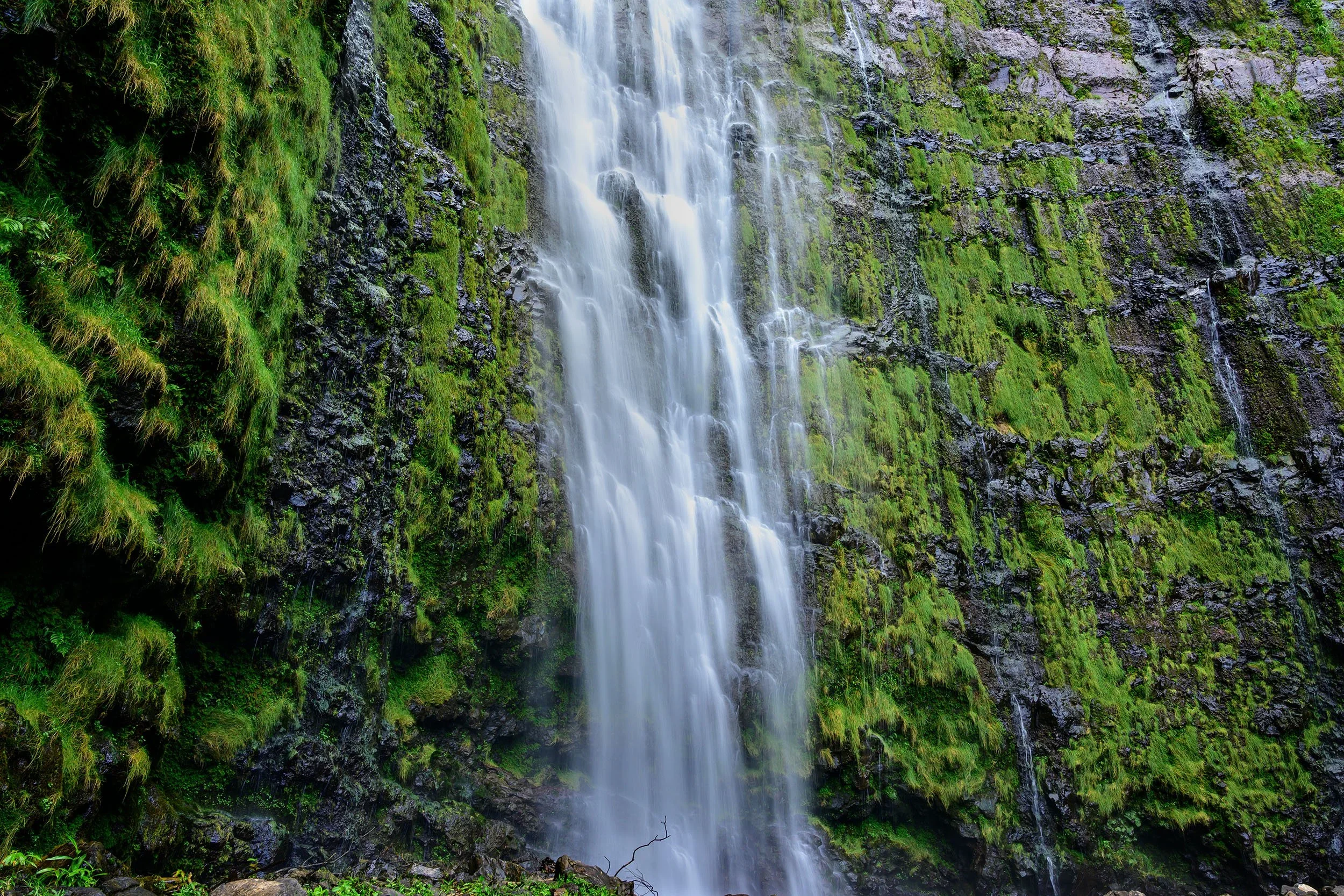
“Blessed” from the Fresh Water Therapy fine art series
I’ve been fortunate enough to spend many days and many nights in these sacred spaces, on personal adventures and also through conservation work with the Friends of Haleakalā, a non-profit organization dedicated to preserving Haleakalā's unique ecosystems, scenic character, and the Native Hawaiian cultural and spiritual resources. This has allowed me to capture and document awe-inspiring moments of light from unique locations within the park.
There is so much mana (life force) from the summit to the ocean, and all of its diverse beauty is truly what makes Haleakala National Park such a marvelous place to experience.
1. Wikipedia