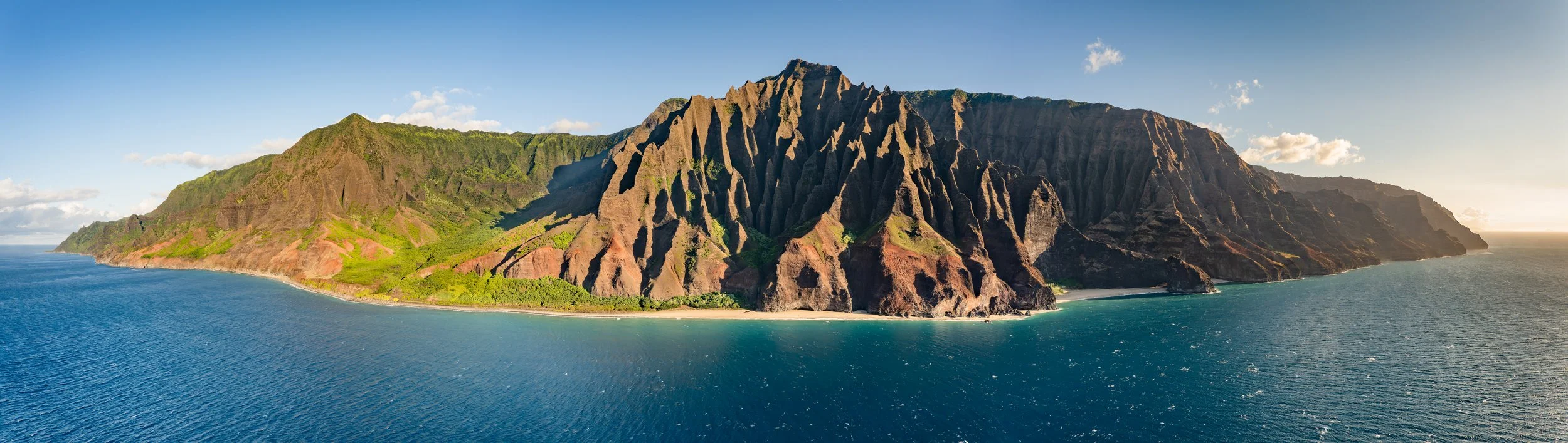
“ENLIGHTEN” from the BIRD’S EYE VIEW award-winning print series.
Along the northwestern shore of Kauaʻi lies one of the most dramatic coastlines on Earth: the legendary Nā Pali Coast. This seventeen-mile stretch of raw wilderness is a constant source of inspiration for my life, my spirit, and my creative journeys to produce Hawaiʻi fine art landscape photography.
Towering emerald cliffs rise nearly 4,000 feet above the Pacific Ocean, carved by millions of years of volcanic creation and relentless erosion. Between these cathedral-like ridges are hidden valleys, cascading waterfalls, sea caves, and remote beaches that feel as though they belong to another era of the planet.
From kayaking and backpacking expeditions to numerous helicopter flights, I feel I’ve barely scratched the surface of exploring this sacred coastline.
How the Nā Pali Coast Formed —
A Landscape Shaped by Fire, Water, and Time
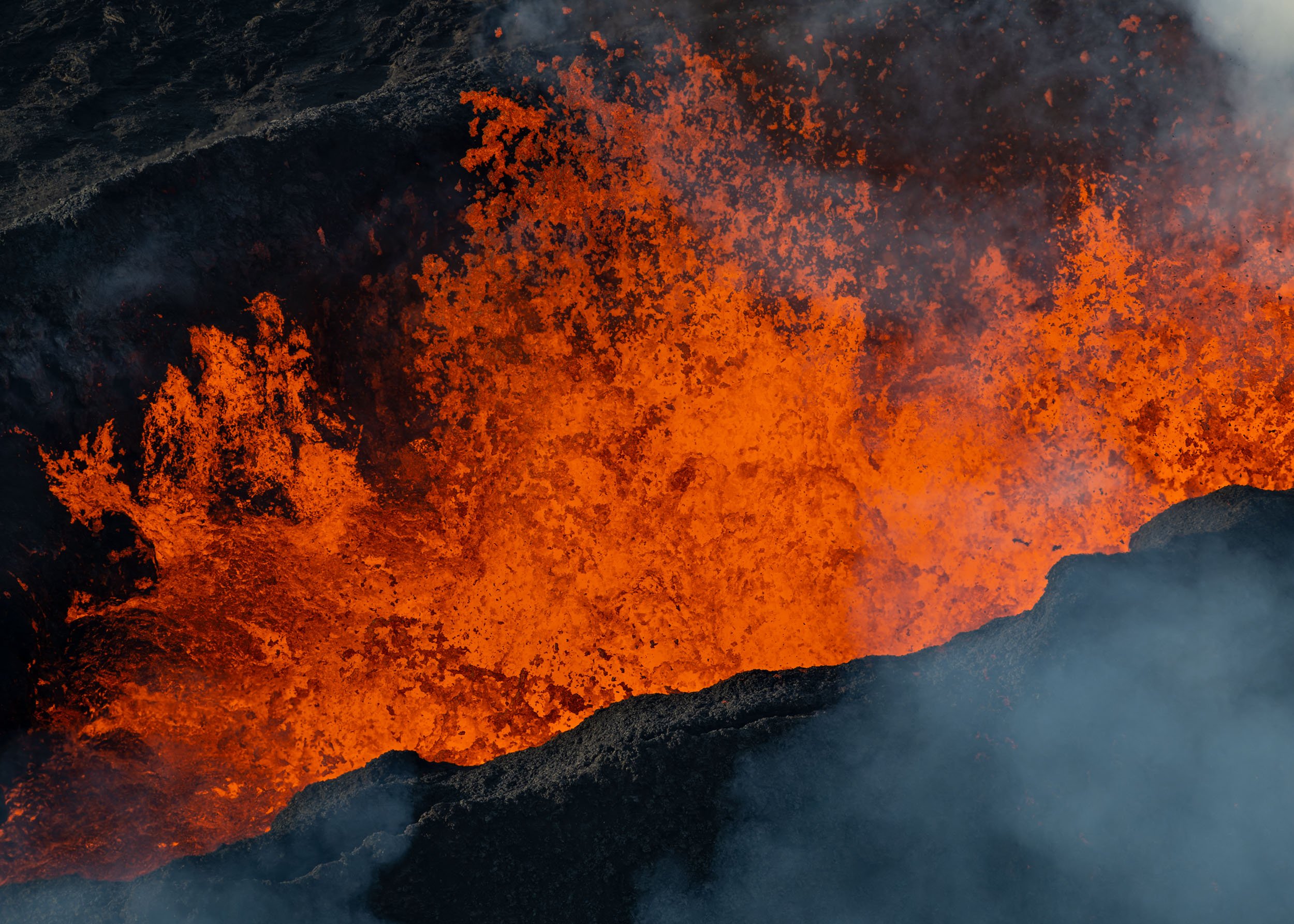
“REVELATION” from the EMERGING EARTH award-winning print series.
The Hawaiian Islands emerged from volcanic activity deep within the Earth’s mantle. Over millions of years, the original shield volcano that formed the island of Kauaʻi slowly eroded by persistent rainfall, strong winds, and rogue waves in the middle of the Pacific Ocean.
Today, that ancient geological story is written into the cliffs and valleys of the Nā Pali Coast.
Seasonal waterfalls plunge thousands of feet down green amphitheaters. Deep canyons such as Kalalau Valley open like vast bowls between ridges, revealing fertile land where Native Hawaiian communities once thrived. Streams flow through the valleys before meeting the sea, continuing the slow sculpting of this extraordinary terrain.
The Hawaiian name Nā Pali simply translates to “the cliffs.”
Yet standing before them, the word feels like an understatement.
One of the Last Roadless Wilderness Areas in Hawaiʻi

“A NEW LIGHT” from the BIRD’S EYE VIEW award-winning print series.
There are no roads that traverse the rugged Nā Pali coastline, and for good reason. It’s isolation has helped preserve the region’s sacred ecology and cultural heritage. Accessing the coastline is only possible by:
Hiking the legendary Kalalau Trail (Permits required)
Kayaking along the coast (Guided tours recommended)
As someone who has experienced all of these ways of accessing the coast, my favorite is kayaking. Paddling through these pristine waters not only immerses you fully into the wild elements that make this place so special, but also provides the greatest insight into what Hawaiʻi must have felt like before western colonization. The history and breathtaking beauty of this ancient coastline deserve to be witnessed at the pace of the ocean.
Ancient Hawaiian Life Along the Nā Pali
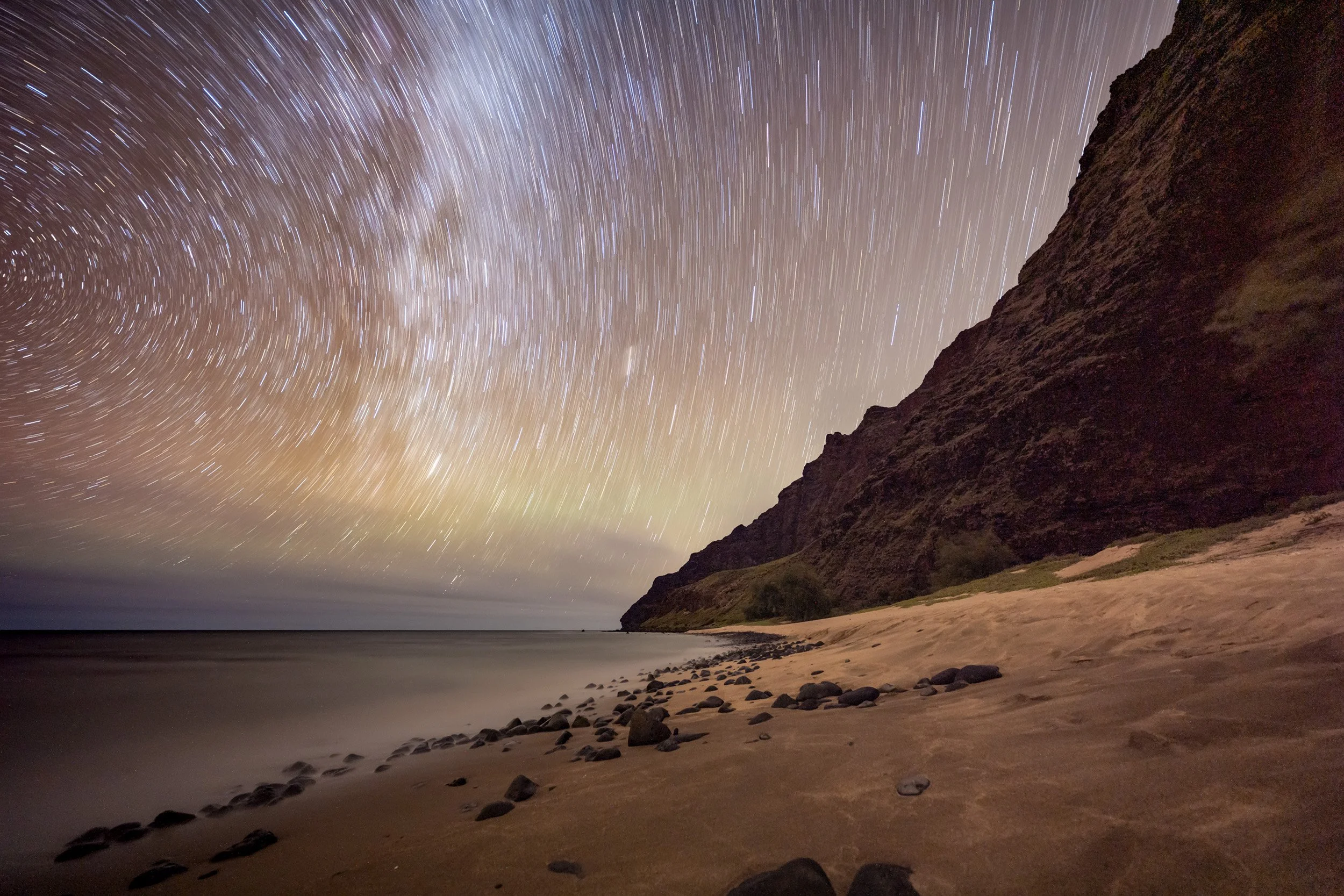
“NEW MOON” from the MAHINA: HAWAIIAN MOONLIGHT limited-edition print series.
From approximately 1100 AD - 1650 AD, the lush valleys of the Nā Pali Coast were home to a thriving population of ancient Hawaiian communities.
Archaeological evidence shows that families of polynesian settlers lived in places like Kalalau, Miloliʻi, and Nualolo valleys, cultivating kalo or taro in terraced fields and fishing the surrounding reefs. The fertile soils, abundant rainfall, and sheltered valleys created a sustainable environment for generations of Native Hawaiians.
Remnants of these ancient agricultural terraces still remain today. Witnessing these sites felt like stepping back in time, imagining how this spectacular wilderness once supported a deeply connected human relationship with the land.
In Hawaiian culture, this relationship is expressed through their values of mālama ʻāina — caring for the land that sustains us. Here in the islands, caring for these places is not simply a responsibility.
It is a way of life.
Why the Nā Pali Coast Is Protected

“AWAKEN” from the FRESH WATER THERAPY limited-edition print series.
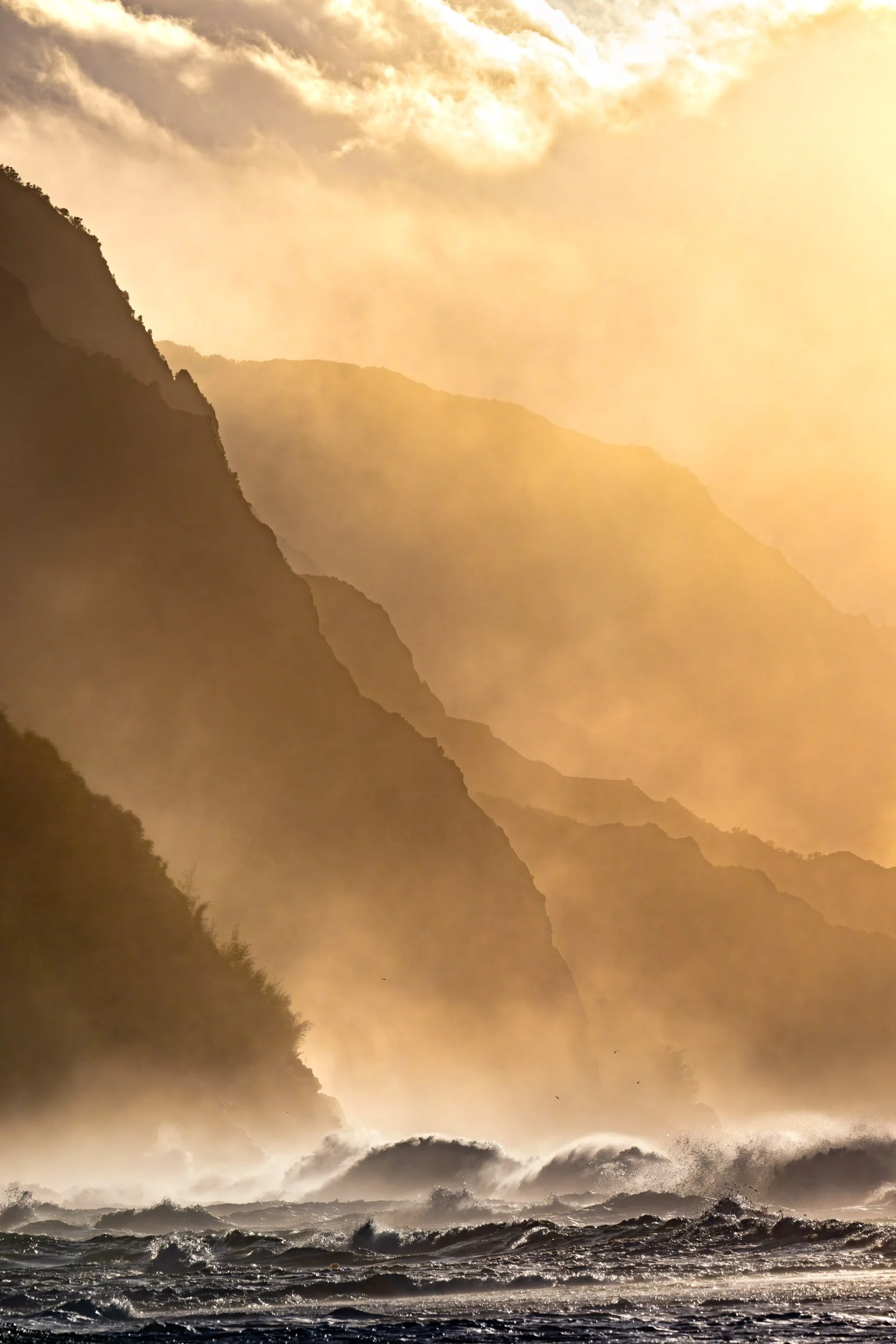
“BEYOND THE VEIL” from the MOUNTAIN MEDITATIONS limited-edition print series.
In 1983, this seventeen-mile coastline was formally protected as Nā Pali Coast State Park, a wilderness preserve covering more than 6,000 acres. The park was established primarily to protect the remarkable landscapes and ecosystems of Kalalau Valley and the surrounding cliffs.
Today, strict regulations limit development and help ensure this place remains one of the most pristine and wild coastal regions in the Pacific.
The Hawaiian Islands contain one of the highest concentrations of endemic species on Earth. Many plants and animals found here exist nowhere else on the planet. These fragile ecosystems are particularly vulnerable to invasive species and human development.
By protecting the coastline as a wilderness park and natural reserve, Hawaiʻi helps preserve:
Native forests and watershed systems
Endangered plant species
Marine ecosystems along the reef-lined coast
Cultural and archaeological sites
In a rapidly developing world, places like the Nā Pali Coast remind us why wilderness still matters.
Experiencing the Nā Pali Coast Today
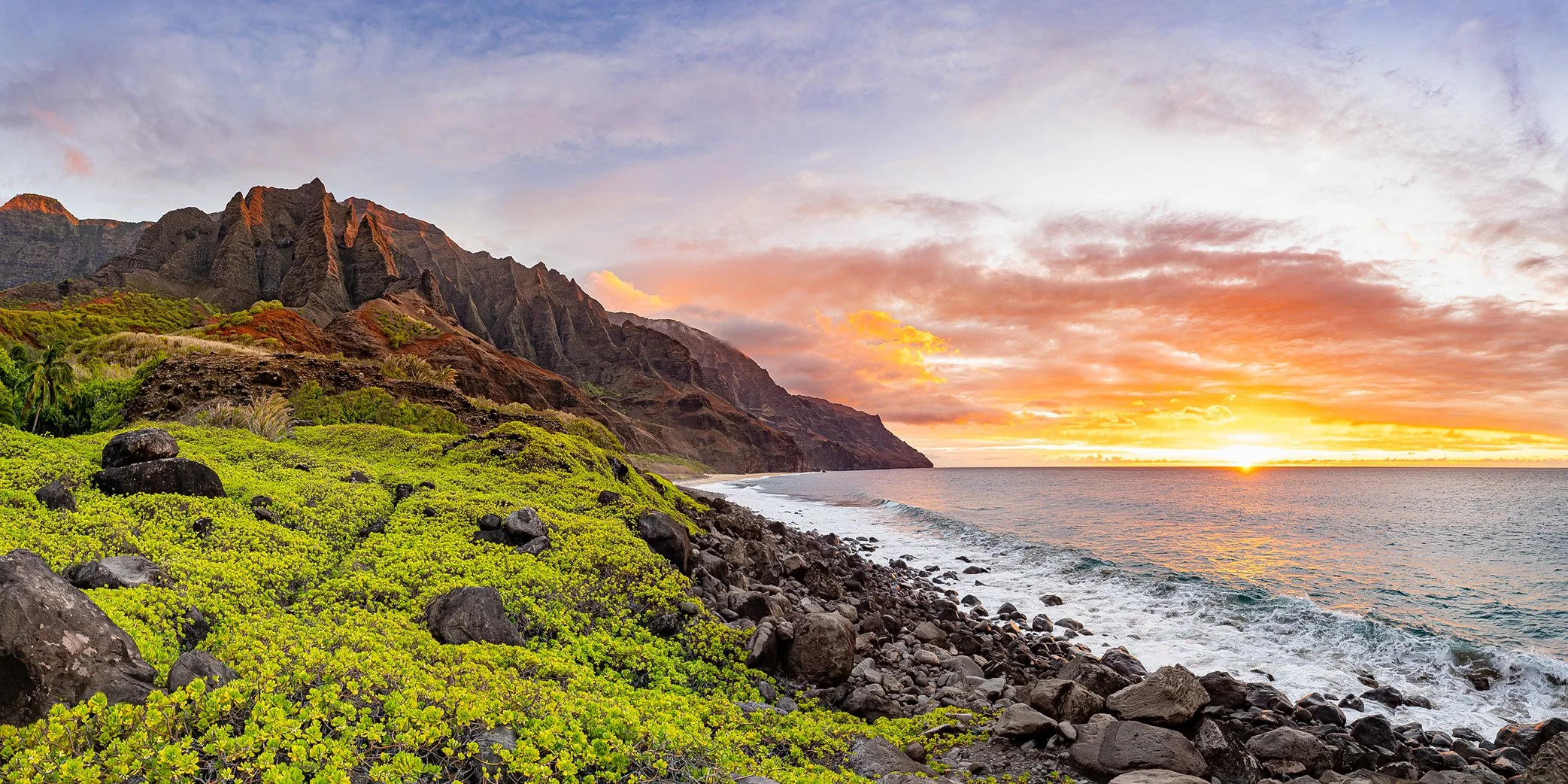
“A PLACE TO CALL HOME” from the OCEAN THERAPY limited-edition print series.
If you’re planning to explore the Nā Pali Coast State Wilderness Park, please kōkua (help) the island and research before visiting. You can find information online from official sources like the Hawaii Department of Land & Natural Resources website. Educating yourself will allow you to have a safe experience and respect the natural and cultural resources that keep this place sacred.
For those fortunate enough to explore the Nā Pali Coast, the adventures and memories you’ll create here are among the most special experiences in the Hawaiian Islands.
Hikers make the ardouos eleven-mile trek along the narrow ledges of the Kalalau Trail, weaving in and out of five remarkable valleys where mountains and streams plunge straight into the sea. Kayakers are at the mercy of the ocean, but witness something truly special — sea caves carved by millennia of waves, vibrant marine life, stunning coastal waterfalls, and an authentic Hawaiian voyage you’ll never forget. From above, helicopter flights reveal the true scale of the coastline — immense kinfe-edge ridgelines unfolding along the Pacific horizon, and the hidden treasures tucked away in the sacred valleys of Kauaʻi.
Each perspective reveals a different dimension of the landscape, yet no matter how you encounter this place, the feeling is the same:
A sense that this place exists beyond the reach of ordinary time.

“NĀ PALI” from the BIRD’S EYE VIEW award-winning print series.
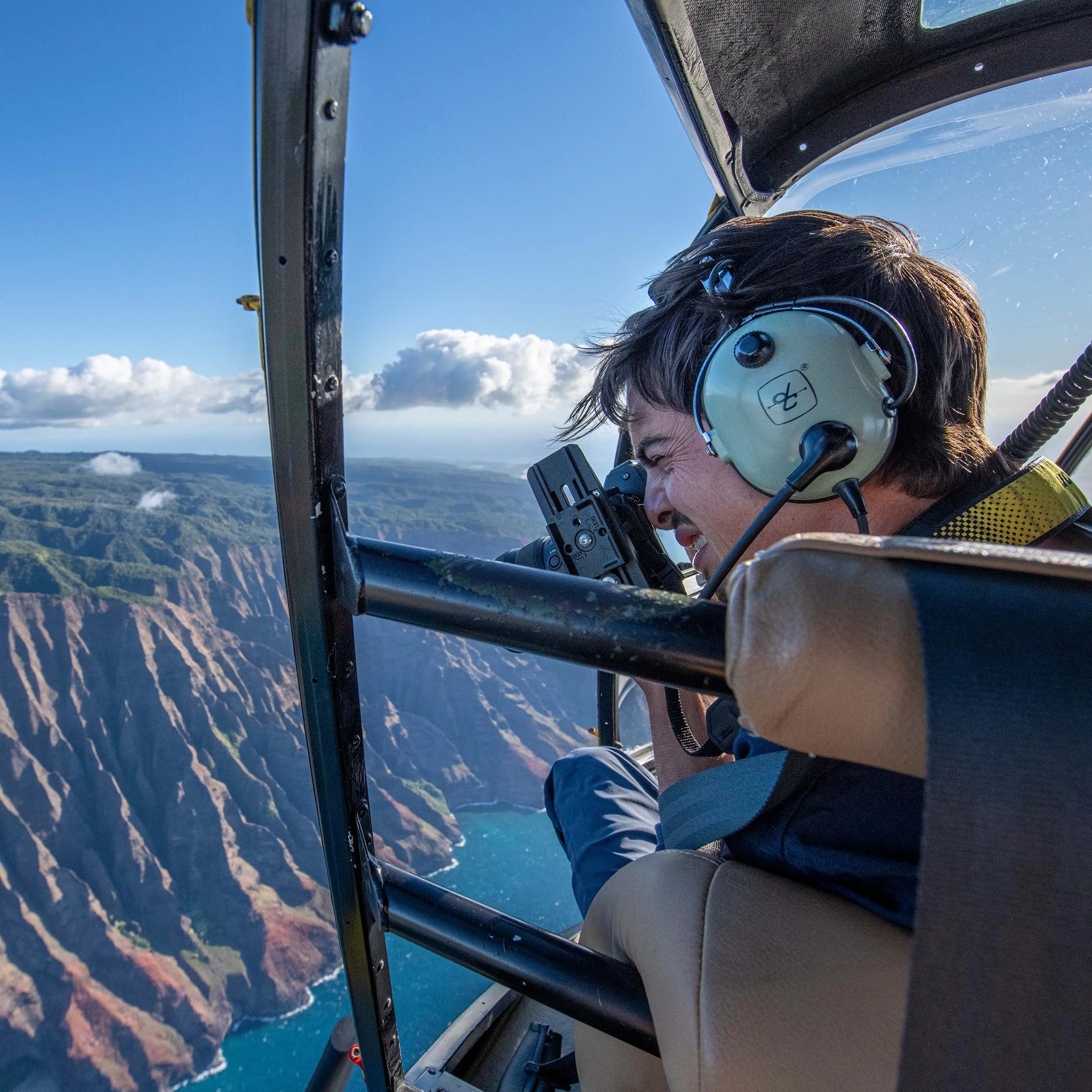
About the Artist
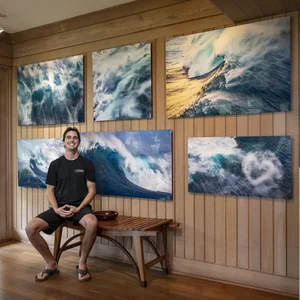
Cody Roberts is an award-winning fine art photographer whose work explores the relationship between wild landscapes and the forces that shape them. His photography from Hawaiʻi and remote regions of the world has been recognized internationally and exhibited in galleries and collections globally.
Explore the Artwork